Eco-Friendly
Salt-Free Water Conditioner
Scale prevention without salt. Eco-friendly water conditioning that preserves healthy minerals while protecting your plumbing. No electricity required.
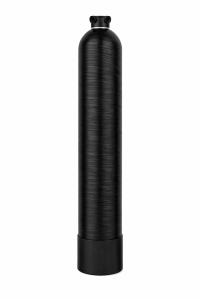
No Salt Required
Lifetime Warranty
Scale prevention without salt. Eco-friendly water conditioning that preserves healthy minerals while protecting your plumbing. No electricity required.
Get the benefits of conditioned water without the hassles of traditional softeners.
Never buy, lug, or refill salt bags again. Maintenance-free operation.
No salt discharge into wastewater. Better for the environment.
Keeps healthy calcium in your water while preventing scale buildup.
Works without power. No timers, no programming, no hassles.
Salt-free conditioners use Template Assisted Crystallization (TAC) technology to change the structure of hardness minerals without removing them.
Water flows through catalytic media that transforms hardness minerals into microscopic crystals.
These crystals remain suspended in water and won't adhere to pipes or fixtures.
Calcium and magnesium stay in the water for health benefits, but won't cause scale.
💡 Important: Salt-free conditioners prevent scale but don't remove hardness. Water won't feel "soft" like with ion exchange systems.
| Feature | Salt Softener | Salt-Free |
|---|---|---|
| Removes hardness minerals | Yes | No - conditions them |
| Prevents scale buildup | Yes | Yes |
| Salty water feel | Yes | No |
| Adds sodium to water | Yes | No |
| Requires salt bags | Yes | No |
| Needs electricity | Yes | No |
| Maintenance | Monthly salt addition | Media replacement ~5 years |
| Best for | Hard water + soft feel | Scale prevention + eco-friendly |
No added sodium to your water. Safe for those monitoring salt intake.
No salt discharge into wastewater. Better for plants and environment.
Works without electricity. Perfect for cabins, rural properties, and solar homes.
Product Infosheet
Download the full spec sheet for this system
Salt-free conditioners prevent scale buildup effectively for Houston's 7–10 GPG hardness range — they're well-suited for moderate hardness like ours. The key distinction is what "works" means: if you want to prevent limescale on showerheads, protect your water heater, and stop white deposits from forming on fixtures, yes, a salt-free conditioner works. If you want the slippery, silky feel of softened water on your skin and dramatic soap lathering, a traditional ion-exchange softener is what you need. Salt-free conditioners condition the minerals (prevent adhesion) rather than removing them, so the water chemistry is different even if the scale problem is solved.
The salt-free conditioner is the best fit for homeowners who want maintenance-free scale protection without the ongoing cost and effort of buying, hauling, and adding salt bags. It's also the right choice if you're on a low-sodium diet and don't want any added sodium in your water, if you have a septic system (salt discharge can disrupt septic biology), or if your water hardness is under 15 GPG and your main concern is appliance and plumbing protection rather than the soft-water feel. Renters, snowbirds, and second-home owners who prefer a set-it-and-forget-it solution frequently choose this system over traditional softeners.
No — and this is an important distinction. Water softening specifically means removing calcium and magnesium ions through ion exchange, replacing them with sodium. This changes the water chemistry and produces the characteristic "slippery" feel. Salt-free conditioning uses Template Assisted Crystallization (TAC) to transform hardness minerals into microscopic crystals that stay suspended in water rather than adhering to surfaces. The minerals are still technically in the water — your TDS (total dissolved solids) reading won't change. Scale protection is comparable, but the water won't feel soft in the traditional sense. Many manufacturers use "salt-free softener" as marketing language, but conditioning is the more accurate term.
Very little — this is one of its biggest advantages. There are no salt bags to buy or haul, no regeneration cycles, and no electricity to run. The TAC media typically lasts 5–7 years before needing replacement. The system has no control valve, no drain connection, and no timer to program. It's a passive, flow-through system. The only maintenance is an annual visual check and periodic backwash if sediment accumulates in your water supply. We recommend pairing it with a pre-sediment filter upstream for maximum media longevity, especially on well water or older municipal supplies with sediment issues.
Yes, and we often install them as part of a multi-stage system. A common Houston setup is a whole-house carbon filter (to remove chloramines and reduce DBPs) followed by a salt-free conditioner (for scale prevention) — this gives you chemical-free water throughout the house without any salt usage. Adding an under-sink RO system for drinking water then covers PFAS, nitrates, and any remaining contaminants. This combination is particularly popular with homeowners on low-sodium diets or those who want an eco-friendly whole-house solution without committing to a salt-based softener.
Get a free water test and find out if salt-free conditioning is right for your home.