Eliminate rust stains and rotten egg smell. Air injection oxidation technology removes up to 15 ppm iron, 5 ppm sulfur, and 5 ppm manganese - no chemicals needed.
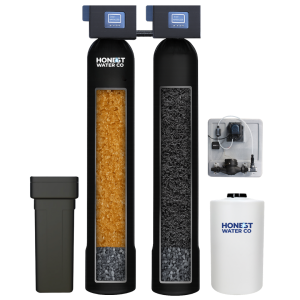
Well water in the Houston metro often contains iron and sulfur. These contaminants cause obvious problems that affect your daily life and home value.
Rust stains on sinks, tubs, and toilets
Cause: High iron content
Rotten egg smell from water
Cause: Hydrogen sulfide gas
Black slimy buildup
Cause: Manganese and bacteria
Orange staining on laundry
Cause: Dissolved iron
Metallic taste
Cause: Iron and minerals
Clogged pipes and fixtures
Cause: Iron and manganese deposits
Removes up to 15 ppm iron. Eliminates rust stains, metallic taste, and orange water.
Removes up to 5 ppm sulfur. Stops rotten egg smell in one day.
Removes up to 5 ppm manganese. Stops black staining and buildup.
Chemical-free oxidation process removes iron and sulfur naturally.
The system draws in air through an injector, creating an oxygen-rich environment in the tank.
Iron, sulfur, and manganese are oxidized (turned into particles) as they contact the oxygen.
Katalox Light media traps the oxidized particles while allowing clean water to pass through.
System automatically backwashes to flush trapped contaminants down the drain.
Iron & sulfur systems work best as part of a complete water treatment solution.
Remove iron first, then soften the water. The complete well water solution.
Pre-filter sediment before the iron filter for maximum efficiency.
The signs are usually obvious. Iron in well water leaves orange or rust-colored stains in sinks, toilets, tubs, and on laundry — especially on white fabrics. You may notice a metallic taste in drinking water. Sulfur (hydrogen sulfide gas) produces the unmistakable "rotten egg" smell that's especially noticeable when you run hot water or first thing in the morning. Manganese causes black or gray staining and a slightly bitter taste. The EPA's secondary drinking water standard for iron is 0.3 mg/L (0.3 ppm) — above this, staining and taste problems begin. Many well water sources in Johnston, Chatham, and rural Wake County exceed this significantly. The only way to know your exact levels is a water test, which we provide free of charge.
Yes, though for different reasons. Iron can enter municipal water through aging cast iron or galvanized steel pipes — both in the city's distribution system and in older homes' internal plumbing. If you notice rust-colored water after the water has sat overnight in your pipes, or if your water runs clear and then turns orange after a few seconds, the issue is likely pipe corrosion rather than the source water. For city water iron problems, the solution may be a simpler cartridge-style sediment filter rather than a full iron removal system. A water test will tell us the iron type (ferric/particulate vs. ferrous/dissolved) and guide the right recommendation.
Yes — air injection oxidation removes both iron and hydrogen sulfide (the gas responsible for the rotten egg smell) in the same unit. The process oxidizes dissolved sulfur gas just like it oxidizes dissolved iron, converting it to particles that are trapped by the Katalox media and flushed during the backwash cycle. Most customers report the smell disappearing completely within the first day or two after installation. The system handles up to 5 ppm of sulfur — if your well has higher levels, we may recommend a supplemental treatment approach. Our free water test measures sulfur alongside iron and manganese so we can size the system correctly.
No — the iron and sulfur filter removes iron, manganese, and sulfur through oxidation and physical filtration, but it does not remove hardness minerals (calcium and magnesium) and it does not soften water. If your well water has both iron and hardness — which is common throughout the Houston metro's rural areas — you'll need both an iron filter and a water softener. They're installed in sequence: iron filter first, softener second. Removing iron before the softener is critical because iron fouls softener resin, dramatically reducing its effectiveness and lifespan. Running iron-laden water through a softener first will destroy the resin within months.
The system is largely self-maintaining. The Fleck 2510AIO digital valve automatically runs a backwash cycle on a programmable schedule — typically every 3–5 days — which flushes accumulated iron and sulfur particles to the drain. You don't add any chemicals, salts, or media between annual service checks. The Katalox Light media itself lasts 7–10 years before replacement. The main maintenance task is periodic inspection of the air injector to ensure it's drawing air properly — something we check during any service call. If you pair the iron filter with a softener, you'll still need to add salt to the softener's brine tank as normal.
Get a free water test and custom quote for your iron and sulfur removal system.